



What Lies Beneath Hagia Sophia? First Images of Its Historic Tunnels
Restoration work beneath Hagia Sophia, one of Istanbul's most iconic historic landmarks, has led to the clearance of 420 meters of tunnels and the removal of nearly 3,000 tons of fill material. Excavations have also revealed previously unidentified chambers and structural layers believed to predate the existing building.
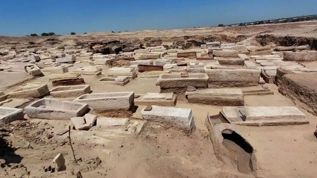
Hundreds of coffins and ‘gold tongues' unearthed beneath the ground in Egypt
Archaeological excavations in Egypt have uncovered hundreds of coffins, along with gold tongue-shaped pieces, jewelry and human remains bearing traces of mummification. Preliminary findings suggest the cemetery was used by middle-class residents during the 3rd and 2nd centuries BC.

Who was Typhoid Mary? How was a cook's hidden secret revealed?
A remarkable story features on the Associated Press' "Today in History" page. Mary Mallon, a cook who went down in history as "Typhoid Mary," died on November 11, 1938, at the age of 69 on North Brother Island, located in New York's East River. But why did Mallon, who spent approximately 26 years of her life in mandatory isolation, become known as "Typhoid Mary"? How did a cook's name become synonymous with deadly outbreaks? Here is her extraordinary story...
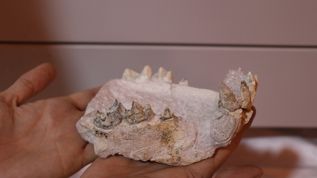
2.5 million-year-old saber-toothed cat fossil identified in Turkish museum
Fossil discovered in 1989 is most complete specimen of its kind found in Anatolia, researchers say
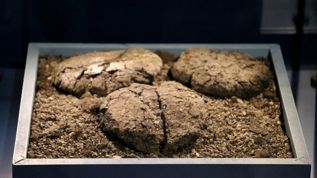
What a 5,000-year-old fire left behind: Ancient bread found in Türkiye
Eight pieces of bread preserved after being charred in a fire nearly 5,000 years ago have been discovered at Seyitomer Mound in western Türkiye, alongside traces of wheat and lentils.
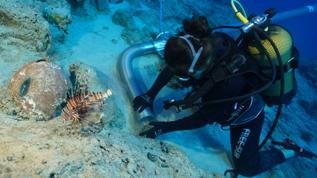
World's oldest shipwreck discovered off Türkiye's coast enters Guinness World Records
A shipwreck discovered off the coast of Kekova Island in Antalya, Türkiye, and dated to around 4,700 years ago has entered Guinness World Records as the world's oldest known shipwreck. Initially thought to date back to the Ottoman period, the wreck was found through scientific examinations to date back to the Early Bronze Age.
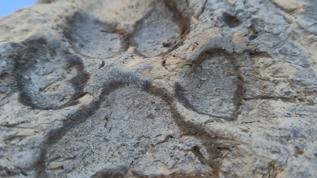
These paw prints are 4,000 years old.
Paw prints left by a dog on an undried mudbrick around 4,000 years ago have been discovered at Tavşanlı Höyük, a Bronze Age settlement in Kütahya, western Türkiye, offering a rare glimpse into everyday life in the ancient city.

Istanbul's vanished historic mosque to rise again after 70 years
Built during reign of Ottoman Sultan Suleiman to serve sick palace gardeners, mosque was located outside sea walls of Topkapi Palace
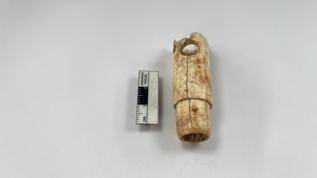
Major surprise at Troy: First musical instrument found in 160 years of excavations
A musical instrument has been found for the first time during more than 160 years of excavations at the famous archaeological site of Troy in Türkiye. The bone flute is approximately 2,800 years old. An anthropomorphic idol head was also discovered during the excavations. So, what does this mean?
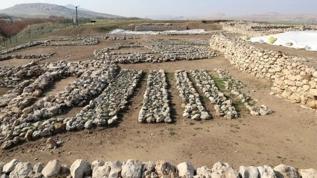
9,000-year-old mining workshop found in Türkiye
Discovery dating to 6900-6800 B.C. offers new evidence of early copper production, specialized craftsmanship at one of region's oldest Neolithic settlements
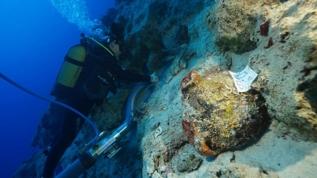
World's Oldest Shipwreck Found in Türkiye: Was It Heading to Troy?
The world's oldest shipwreck has been found in Türkiye, near Kekova Island off the coast of Antalya! Amphorae dating back 4,400 to 4,700 years, recovered from the wreck, suggest that the vessel may have been heading toward Troy or Crete. An amphora bearing nine markings also suggests that sailors may have made cheese or butter on board thousands of years ago.
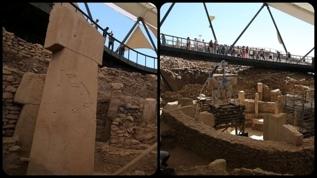
What is Göbeklitepe? Location, age and why it matters
Located near Şanlıurfa in southeastern Türkiye, Göbeklitepe is one of the most remarkable archaeological sites in human history. Dating back approximately 12,000 years, the site is known for its monumental stone structures and the animal figures carved into them.
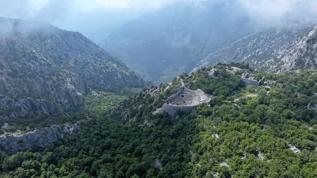
The hidden eagle's nest Alexander the Great could never conquer
Located among the rugged peaks of Mount Güllük in Antalya, Türkiye, the ancient city of Termessos resisted the siege of Alexander the Great in 333 BC and refused to surrender thanks to its strong defenses. With its eagle's-nest-like location, ancient ruins spread across the mountains, monumental tombs and theatre, the city is one of Türkiye's archaeological sites where history and nature come together.
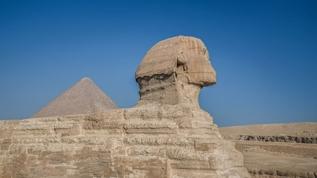
Egypt: Ancient crocodilian found in rocks that built Great Sphinx
A new crocodilian species that lived 45 million years ago has been identified from fossils found in the same formation that supplied stone for Egypt's Great Sphinx. Named Herugavialis cairensis, the animal lived in the shallow tropical seas that once covered what is now northern Egypt.

3,400-year-old Hittite royal archive found: Epidemic, baby princess and war warnings
A striking archaeological discovery has been made in Türkiye... The 3,400-year-old archive of the Hittite royal family has been unearthed during excavations. An epidemic, the death of a baby princess, divination, warnings of war from commanders... So, what do the tablets reveal?
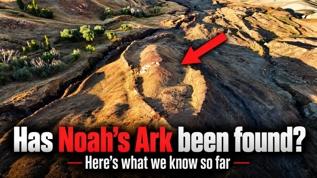
Has Noah's Ark been found? Here's what we know so far
Mount Ararat (Ağrı Dağı) in Türkiye has been in the global spotlight in recent days. The reason is the search for Noah's Ark. So, what is the latest situation? What do scientists say about this? Are the claims circulating on social media that Noah's Ark has been found true? Let's take a look...
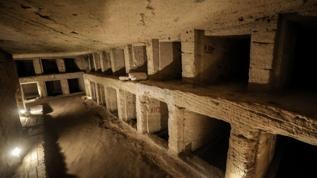
Catacombs of Kom el Shoqafa: Hidden underground for centuries, discovered by chance
The Catacombs of Kom el Shoqafa in Alexandria, Egypt, are ancient underground tombs dating to the 2nd century AD that reflect the architectural and funerary traditions of both ancient Egypt and Rome. In this article, we explore what the Catacombs of Kom el Shoqafa are, what the name means, and what makes this historic site notable.
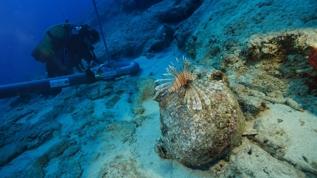
Found in a shipwreck 2,100 years later: Cicero had ordered them too
A 2,100-year-old shipwreck off Adrasan, on Türkiye's Mediterranean coast, has yielded luxury tableware that was particularly sought after in Rome. Mentioned in a letter by the Roman orator Cicero, how did these vessels survive for 2,100 years?
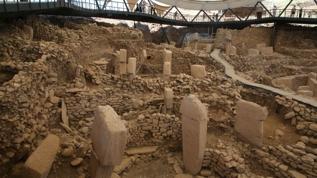
7,000 years older than Stonehenge: Why Göbekli Tepe matters — and what we have learned
Excavations at Göbeklitepe reveal that agriculture and animal husbandry were not the cause of settled life, but its consequence. The findings show that communities 12,000 years ago were not only surviving, but had also made advances in architecture, technology and art.
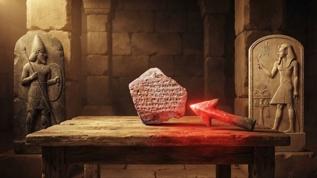
The Hittites, Egypt, and the Treaty of Kadesh: Another lost piece of history found
A new cuneiform tablet fragment belonging to the Treaty of Kadesh, signed between the Hittite Empire and Egypt—the two great powers of the ancient world—has been unearthed. Found during excavations at the Boğazköy/Hattusha Archaeological Site in Boğazkale, Çorum, Türkiye, the artifact adds new insights into one of the most significant documents in the history of world diplomacy.
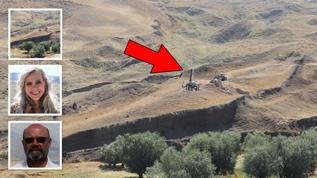
Is Noah's Ark here? Radar scans conducted in the mysterious area
Scientific studies are continuing in an area in Ağrı where it is claimed that remains of Noah's Ark are located. GPS points have been determined, a three-dimensional map of the area has been prepared and radar scans have been conducted. While soil samples are being collected based on the data obtained, three teams, including Bear Grylls' team, are filming documentaries in the region.
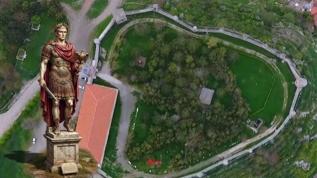
This is the fortress where Caesar said, ‘Veni, vidi, vici'
Zile Castle in Tokat Province, Türkiye, stands out for its thousands of years of history and its connection to Julius Caesar's famous phrase, “Veni, vidi, vici” (I came, I saw, I conquered).
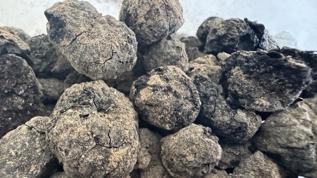
It was on the menu 8,000 years ago! Found in Türkiye
Charred fig remains found in Andik Cave in northwestern Türkiye reveal that the fruit was consumed in the region around 8,000 years ago. Carbon-14 analysis dates the remains to around 6300 BC.
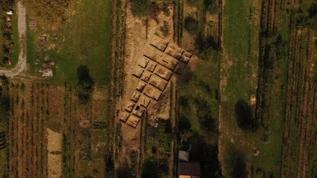
Archaeology sheds new light on Suleyman the Magnificent's final campaign in Hungary
Research shows Ottoman settlement surrounding sultan's tomb near Szigetvar was larger and wealthier than previously thought
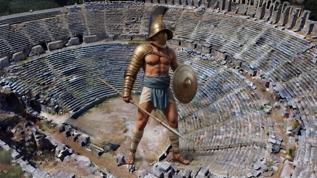
Gladiator battles once took place here
Once echoing with the fierce clashes of gladiators and the weighty debates of ancient councils, Antalya's millennia-old amphitheaters now stand as breathtaking cultural stages, welcoming travelers from across the globe.
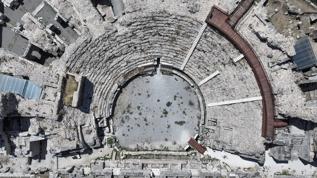
The mystery of an ancient plague is uncovered
Discovery made among remains of nearly 20 people buried south of Roman theater in Iznik, ancient city that later became important Byzantine settlement
- Popular News -
What Lies Beneath Hagia Sophia? First Images of Its Historic Tunnels

GTA 6 generates estimated $2.36 billion in launch revenue

GTA VI ties 28-year-old Metacritic record with near-perfect score
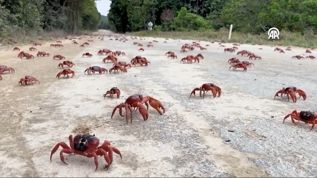
Millions of red crabs begin annual migration to the ocean on Christmas Island
Hundreds of coffins and ‘gold tongues' unearthed beneath the ground in Egypt

Tesla to refund Cybertruck customers as production set to end