

Who was Typhoid Mary? How was a cook's hidden secret revealed?
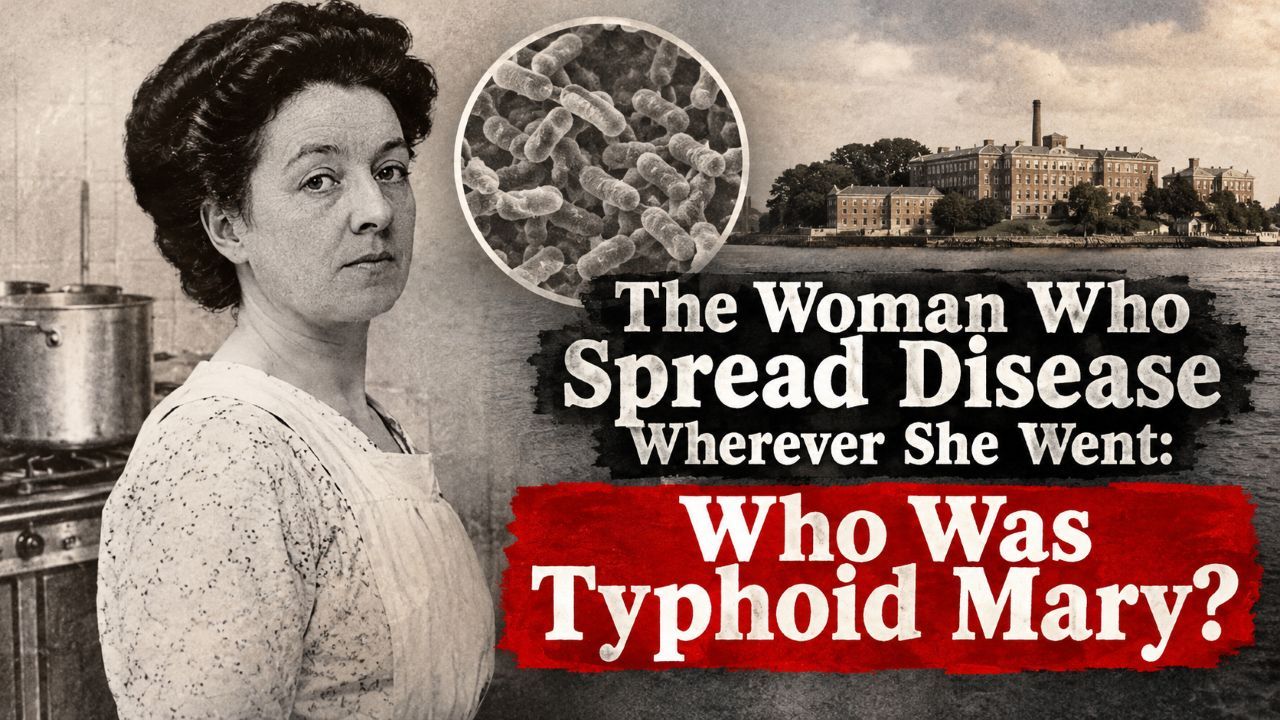
A remarkable story features on the Associated Press' "Today in History" page. Mary Mallon, a cook who went down in history as "Typhoid Mary," died on November 11, 1938, at the age of 69 on North Brother Island, located in New York's East River. But why did Mallon, who spent approximately 26 years of her life in mandatory isolation, become known as "Typhoid Mary"? How did a cook's name become synonymous with deadly outbreaks? Here is her extraordinary story...
The years was 1906... Six of the 11 members of a household suddenly contracted typhoid fever at a mansion in Oyster Bay, a summer destination for wealthy New York families. Initial investigations into the source of the disease found no problems with the water supply or food. So how had a deadly infection made its way to the family's dining table?
At the request of the homeowner, sanitary engineer George Soper took charge of the investigation. He first examined the water sources, plumbing and food. However, he found no evidence of any of the usual sources of infection.
He then began pursuing a different possibility: a healthy person carrying the disease without showing any symptoms...
His investigation led him to the household's former cook: Mary Mallon.
OUTBREAKS OCCURRED IN THE HOUSEHOLDS WHERE SHE WORKED
According to the profile Soper presented in an article published in 1919, Mary was a tall, heavyset woman. She was approximately 40 years old at the time of the 1906 incident. She appeared to be in perfectly good health, and there was no known record of her having previously contracted typhoid fever.
Moreover, Mary was no ordinary kitchen worker. Soper described her as a good cook who was able to secure well-paid positions in the homes of wealthy families thanks to her skills. After investigating the households where Mary had worked, Soper determined, based on the records available to him, that typhoid cases had occurred in seven of the eight families.
One of these outbreaks had occurred in 1902 in Dark Harbor, Maine. Seven of the nine people in the household where Mary worked, along with a nurse, contracted typhoid fever. Mary, however, did not fall ill. During the outbreak, she had even cared for her employer, who had previously contracted typhoid. Unaware that Mary might have been the source of the infection, the employer rewarded her for her assistance with a substantial payment in addition to her regular wages.
Soper's records listed 26 cases of illness and one death associated with these families. Most of the households where the outbreaks occurred were in rural areas.
Another detail that stood out in the investigation concerned the division of household duties. Most of the food served to these wealthy families was cooked after being prepared by the cook. This meant that the cooking process killed the bacteria. Tasks that did not require cooking, such as slicing bread and preparing salads and fruit, were handled by butlers and other domestic workers.
For this reason, Soper believed that domestic workers, rather than family members, were more likely to contract the disease during the outbreaks. Among those who fell ill were four laundresses and two gardeners.
SUSPICIONS SURROUNDING PEACH ICE CREAM
But how was Mary spreading the disease while preparing food?
One of the desserts served during the Oyster Bay outbreak caught Soper's attention: ice cream containing pieces of fresh peach.
It was suspected that the bacteria on Mary's hands might have contaminated this dessert, which was not subjected to cooking. According to Soper, the bacteria could have been transferred to food through hands that had not been properly washed after using the toilet. Peach ice cream was among the strongest suspects in explaining this possible route of transmission. However, it had not been proven that the dessert was the actual source of the infection.
THE BACTERIA IN HER BODY WERE NOT DETECTED IN EVERY TEST
Soper, who had begun tracking Mary down, confronted her in 1907. Mary, however, did not believe the accusations. She felt healthy and said she had never had typhoid fever in her life.
Samples taken from Mary after she was taken to a hospital under police escort changed the course of the investigation. While no typhoid bacteria were found in her urine samples, large numbers of bacteria were detected in her stool samples. Mary was carrying the bacteria despite not being ill herself.
Moreover, detecting the bacteria was not always easy. According to Soper, Mary's stool samples were examined an average of three times a week between March 20 and November 16, 1907. No bacteria were detected in five consecutive tests in July. The tests also returned negative results in August. The bacteria remained undetected for a period during September and October as well. However, a more comprehensive examination on October 16 revealed their presence once again.
Soper believed that the bacteria multiplied in Mary's intestines and were transferred to her hands after using the toilet, eventually making their way into the food she prepared. He likened her to a "living culture tube" in which typhoid germs multiplied.
The case became one of the important examples demonstrating that people who show no symptoms of a disease can also play a role in its spread. Mary Mallon went down in history as the first healthy typhoid carrier in the United States to be investigated in detail.
SHE SPENT THREE YEARS ON THE ISLAND
Authorities placed Mary at Riverside Hospital on North Brother Island, located in New York's East River.
Mary made two separate legal attempts to regain her freedom. In her defense, she argued that she had been deprived of her liberty despite having committed no crime and having knowingly harmed no one. However, the courts ruled that health authorities had the right to maintain the isolation order.
The case also attracted public attention. Some newspapers caricatured Mary as a woman frying typhoid germs while preparing food. In other illustrations, she was depicted as a helpless woman sitting alone on the island.
While staying at the hospital, Mary was allowed to receive visitors and occasionally worked as a laundress. However, she never grew accustomed to her isolation.
LOST YEARS
In 1910, she was released on the condition that she never work as a cook again or come into contact with other people's food.
She was also required to report to health authorities at regular intervals.
Mary complied with these conditions for a while. However, she later returned to cooking and used different names to conceal her identity. Soper was unable to determine exactly where she was working for approximately five years. He wrote that in 1914 she was linked to two typhoid cases at a sanatorium in New Jersey and one in New York, although he also noted that these connections were not certain.
A NEW OUTBREAK AT THE HOSPITAL
In January and February 1915, a typhoid outbreak broke out at Sloane Hospital for Women in Manhattan. Twenty-five people at the hospital fell ill. Mary had started working there as a cook approximately three months before the first case was reported.
Hospital employees began to suspect that the cook might be Mary Mallon, who had previously come to attention as a typhoid carrier. According to Soper, the nickname "Typhoid Mary" began to be used jokingly around this time by other hospital employees. The nickname helped authorities establish her identity.
Realizing that suspicion had fallen on her, Mary first fled to New Jersey and then went to a house on Long Island. Authorities tracked her down and forcibly returned her to Riverside Hospital.
SHE SPENT THE REST OF HER LIFE ON THE ISLAND
This time, Mary's isolation continued until the end of her life. However, she was not forced to spend all her remaining years in a hospital ward. She was given a cottage on the hospital grounds, where she lived, occasionally worked at the hospital and received visitors.
In December 1932, she suffered a stroke that left her bedridden.
She died on November 11, 1938, at the age of 69. Including her first period of isolation, she had spent approximately 26 years under mandatory isolation.
Soper's 1919 article recorded 10 outbreaks and 51 cases associated with Mary. Soper also believed that the actual number might have been higher because not all information about her past was available. In later records, the number of cases associated with her was cited as 51, while the number of deaths was given as three.
Without ever contracting typhoid fever herself, Mary Mallon became one of the most widely known carriers involved in the spread of the disease. The world came to know her as "Typhoid Mary."
Photograph: AI-generated illustration
- Popular News -

What Lies Beneath Hagia Sophia? First Images of Its Historic Tunnels

GTA 6 generates estimated $2.36 billion in launch revenue

GTA VI ties 28-year-old Metacritic record with near-perfect score

Millions of red crabs begin annual migration to the ocean on Christmas Island

Hundreds of coffins and ‘gold tongues' unearthed beneath the ground in Egypt

Tesla to refund Cybertruck customers as production set to end