


Major surprise at Troy: First musical instrument found in 160 years of excavations
A musical instrument has been found for the first time during more than 160 years of excavations at the famous archaeological site of Troy in Türkiye. The bone flute is approximately 2,800 years old. An anthropomorphic idol head was also discovered during the excavations. So, what does this mean?
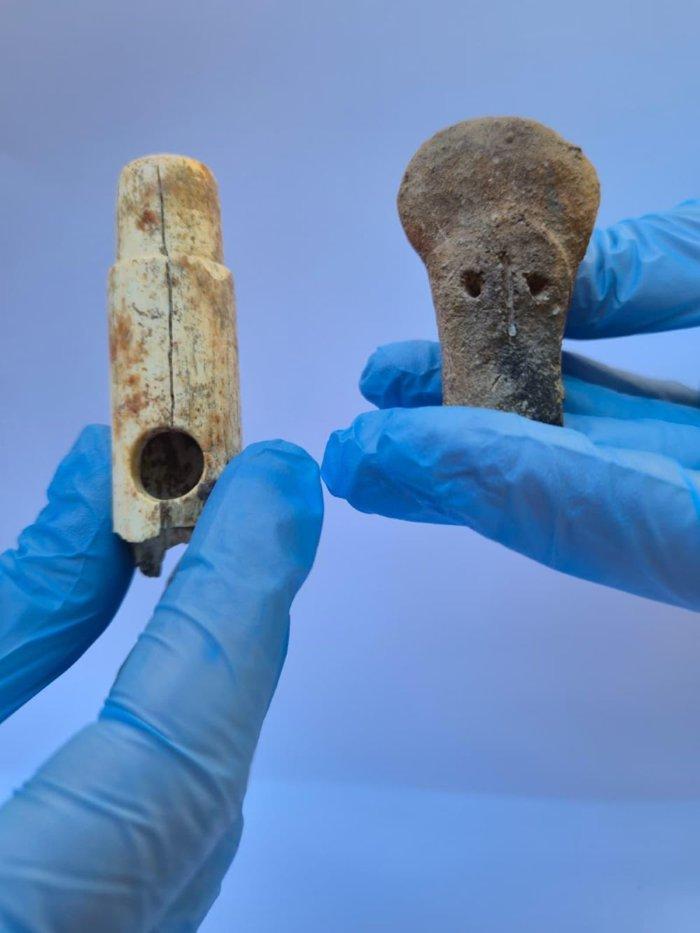
Two finds from different periods at Troy have provided new data on the cultural and artistic history of the ancient city. The idol head dating to the Early Bronze Age and the bone flute dating to the Archaic Period have brought traces of the symbolic world and musical culture of the communities that lived here into the present day.
Direct Evidence of Troy's Musical History
The bone flute, approximately 2,800 years old, was unearthed in an Archaic Period settlement deposit and is the first and only musical instrument found at Troy to date.
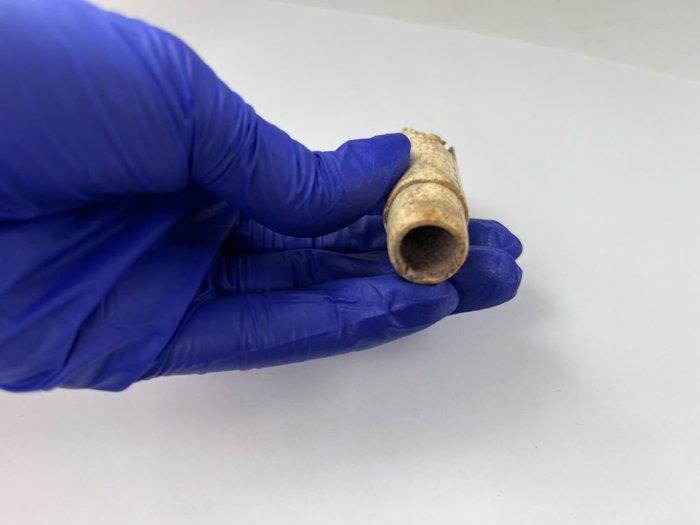
During the Archaic Period, dated to approximately 750–480 BC, music was an important element of social and public life, as well as religious rituals. The new find provides direct archaeological evidence for the existence of a musical culture at Troy during this period.
The difficulty of preserving musical instruments made from organic materials also increases the significance of the find.
Wind instruments of the period included the syrinx, also known as the pan flute, which was made by joining pipes of different lengths crafted from bone or reed. Some wind instruments were associated with the cult of Dionysus and the rituals connected with it.
A 4,500-Year-Old Idol Head from the Area Around the City Gate
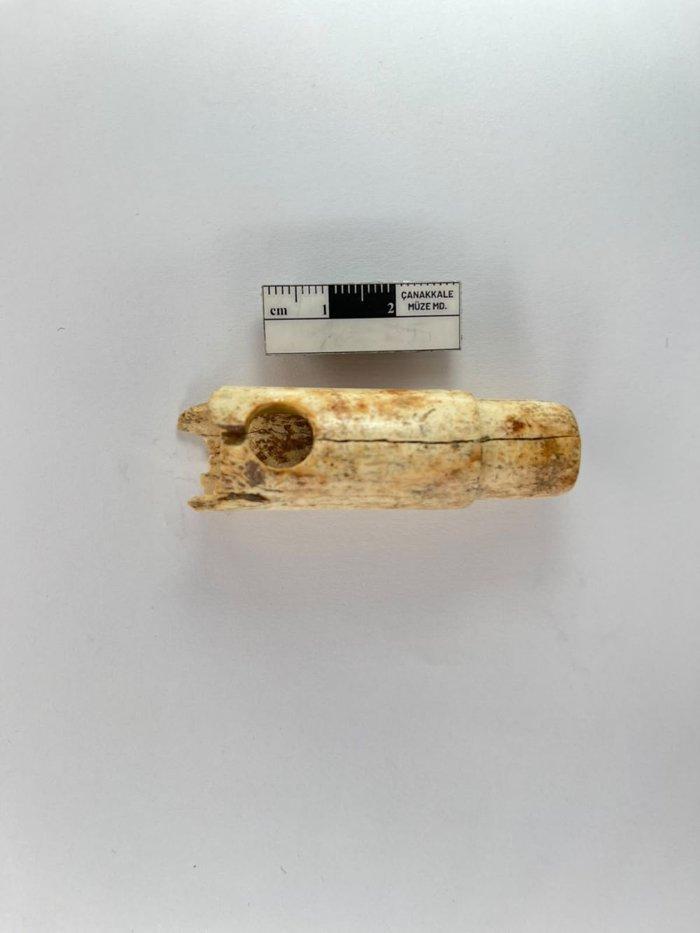
The anthropomorphic idol head discovered during excavations around the city gate of Troy II dates to approximately 2500 BC. The artefact, which belongs to the Early Bronze Age, provides new data for the study of Troy's culture during this period and the symbolic world of western Anatolia.
Thousands of Years of Life Across Ten Major Settlement Layers
Troy's settlement history extends from the beginning of the 3rd millennium BC to the 13th century AD. Ten major settlement layers have been identified at the site over this period.
Following the destruction that occurred in the late 12th century BC, the region experienced a period of approximately four centuries for which no written sources have been found.
From the 8th century BC onwards, Troy once again became an important cultural and sacred centre in connection with the Homeric epics.
The idol head and bone flute discovered during the 2026 excavations contribute to the city's multilayered history as two new artefacts documenting different periods of Troy's past. The finds make it possible to study Troy not only in relation to the Homeric epics and the Trojan War, but also through the beliefs, arts and ways of life of different communities, as well as the relationships between Anatolia and the Aegean world.
Minister of Culture and Tourism Mehmet Nuri Ersoy announced details of the 2026 excavations, conducted as part of the Legacy to the Future Project, on his social media account. Minister Ersoy stated in his post:
"We are contributing to Troy's thousands of years of cultural and artistic history with two new discoveries. During the 2026 excavations carried out under our Legacy to the Future Project, with the permission and support of our Ministry, we unearthed a bone flute dating back approximately 2,800 years and an anthropomorphic idol head dating back 4,500 years. The bone flute, which belongs to the Archaic Period, is the first and only musical instrument discovered to date in the more than 160-year history of excavations at Troy. With this discovery, we have obtained direct archaeological evidence of the musical culture at Troy. The idol head found around the city gate of Troy II has also brought to light a new artefact that will contribute to our understanding of the symbolic world of the Early Bronze Age and cultural interactions in western Anatolia."
- Popular News -

How do you drink your tea? Study reveals surprising findings about heart health

How to Make Authentic Turkish Bursa Doner Kebab: Traditional Techniques and Tips

Tesla unveils new car it says can 'fly'
9,000-year-old mining workshop found in Türkiye

World's Oldest Shipwreck Found in Türkiye: Was It Heading to Troy?
What is Göbeklitepe? Location, age and why it matters