

Who is Anne Carson? Canadian writer wins the 2026 Nobel Prize in Literature
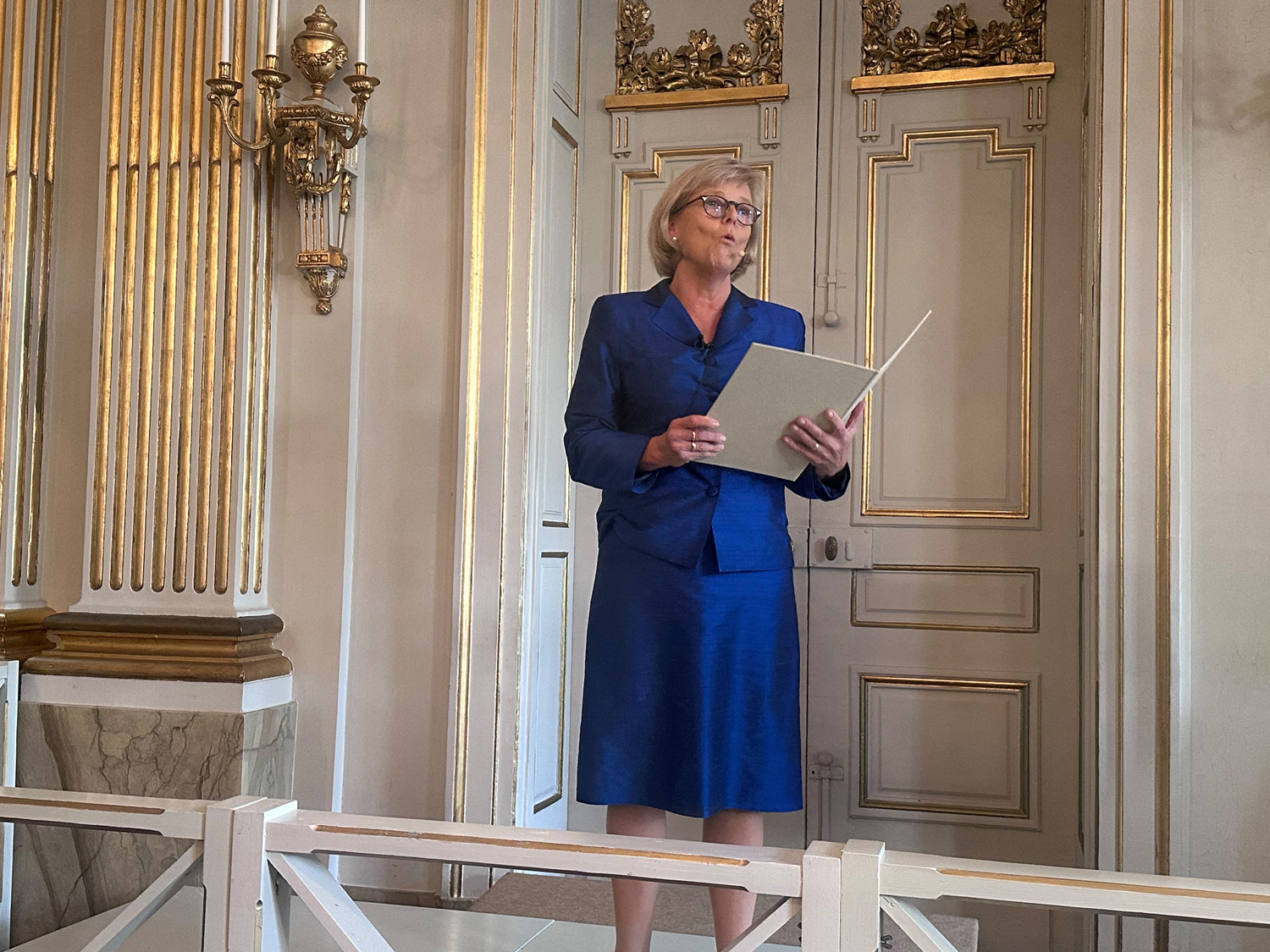
The Nobel Prize in Literature 2026 was awarded to Anne Carson “for her bold and inventive oeuvre that, in playful dialogue with the classical tradition, has created new forms for contemporary literature.” So, who is Anne Carson? What are her most notable works?
Canadian author Anne Carson won the 2026 Nobel Prize in Literature on Thursday for her innovative work drawing on the classical tradition. Toronto-born Carson, 76, blends elements of poetry, essays and fiction in her works, while also drawing on themes and stories from ancient Greek and Roman literature. Carson stands out as one of the best-known recipients of the Nobel Prize in Literature in recent years.
The Swedish Academy awarded Carson the prize "for her bold and inventive oeuvre that, in playful dialogue with the classical tradition, has created new forms for contemporary literature."
Prize motivation: "for her bold and inventive oeuvre that, in playful dialogue with the classical tradition, has created new forms for contemporary literature"WHO İS ANNE CARSON?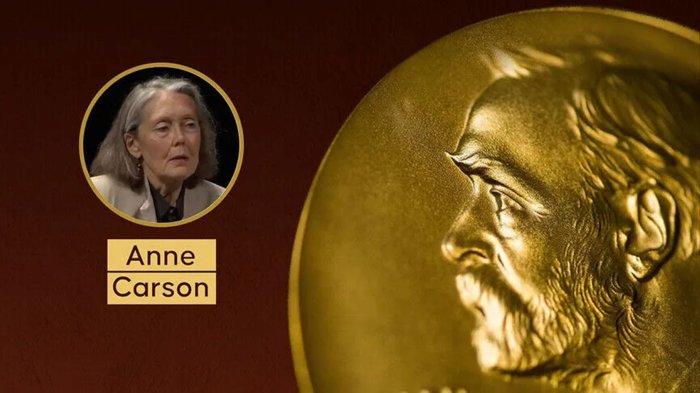
Born in Toronto, Canada, in 1950, Anne Carson has combined poetry, translation and university teaching throughout her career. She has also worked extensively with classical literature, and her writing often explores the intersection between the philologist's attention to words and the poet's search for new meaning. Carson has identified the etymology of words as a starting point for her work.
Her education and work with classical literature
In 1981, she published her doctoral thesis in Classics, Odi et Amo Ergo Sum. Her translations from Classical Greek include Sappho's poem fragments in If Not, Winter (2002), as well as Sophocles' Electra (2001) and Antigone (2015), and Euripides' Bakkhai (2015).
Eros the Bittersweet and her literary approach
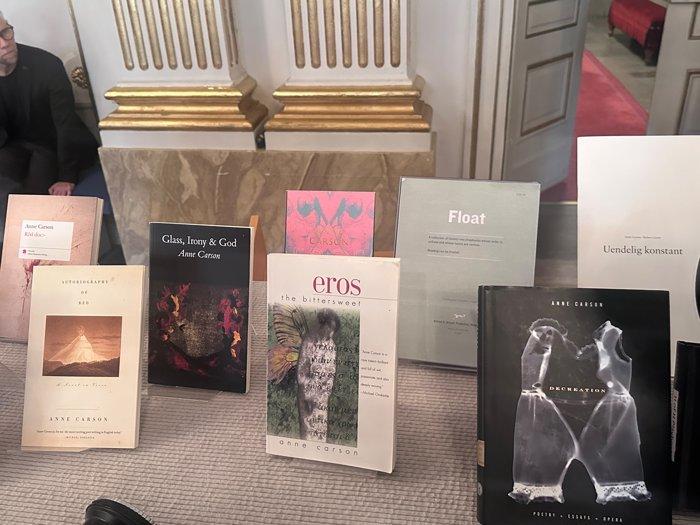
Her long essay Eros the Bittersweet (1986) laid the foundation for much of her subsequent work. The book explores Eros through Sappho's understanding of love as a combination of pain and sweetness, while Carson brings different voices and perspectives into dialogue with one another.
The Glass Essay and a new approach to poetry
Among her notable works from the 1990s is Glass, Irony, and God (1995), which includes the long poem The Glass Essay. The work blends poetry, narrative and essay, exploring grief and unrequited love while weaving in the work and world of Emily Brontë.
Autobiography of Red: Her acclaimed novel in verse
Another work published in the same decade, often heralded as Carson's greatest, was Autobiography of Red: A Novel in Verse (1998). The book demonstrates her exceptional ability to bring the classical literary tradition to life. Drawing on fragments by the 6th-century BC Greek poet Stesichorus about the winged red monster Geryon, Carson reimagines the terrifying figure as a tender "hero" devoted to his mother, turning the ancient myth into a modern Bildungsroman.
The Beauty of the Husband
The Beauty of the Husband: A Fictional Essay in 29 Tangos (2001) tells the story of a troubled relationship through 29 episodes, each opening with lines of verse by the Romantic poet John Keats.
Nox: A work dedicated to her brother
Another notable work is Nox (2010), written in memory of Carson's brother Michael. The work takes the form of a box containing an accordion-fold-out of photographs, letters and other texts, alongside Carson's translation of Roman poet Catullus' famous elegy for his own deceased brother.
Carson's later works and collaborations
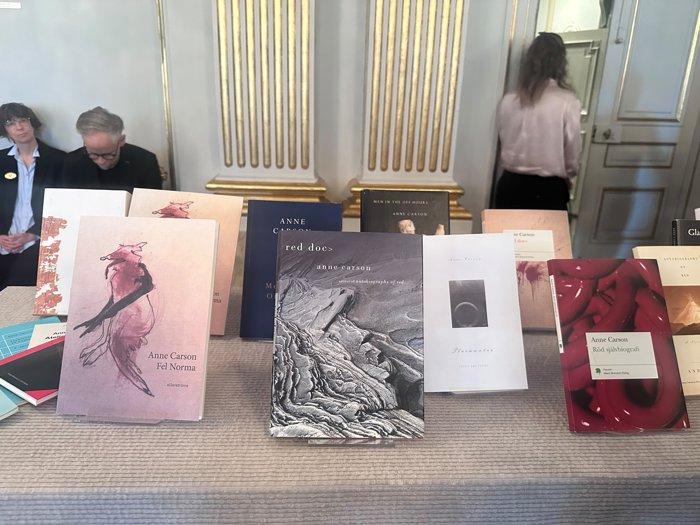
Carson has continued to experiment with literary forms. Float (2016) consists of 22 chapbooks on different subjects that can be read in any order, while Wrong Norma (2024) brings together a diverse range of texts with a strongly performative character.
Throughout her career, Carson has also collaborated with visual artists, choreographers, and opera and theater directors. Her work crosses boundaries between poetry, prose, translation, visual art and other forms, contributing to her importance on the international art and literature scene since the 1990s.
Photographs: Anadolu Agency
- Popular News -
How do you drink your tea? Study reveals surprising findings about heart health
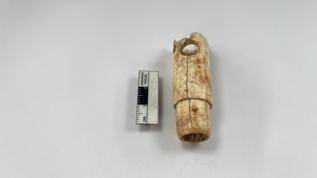
Major surprise at Troy: First musical instrument found in 160 years of excavations
How to Make Authentic Turkish Bursa Doner Kebab: Traditional Techniques and Tips

Tesla unveils new car it says can 'fly'
9,000-year-old mining workshop found in Türkiye
World's Oldest Shipwreck Found in Türkiye: Was It Heading to Troy?