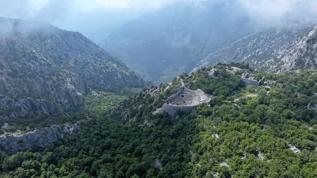


What is Göbeklitepe? Location, age and why it matters
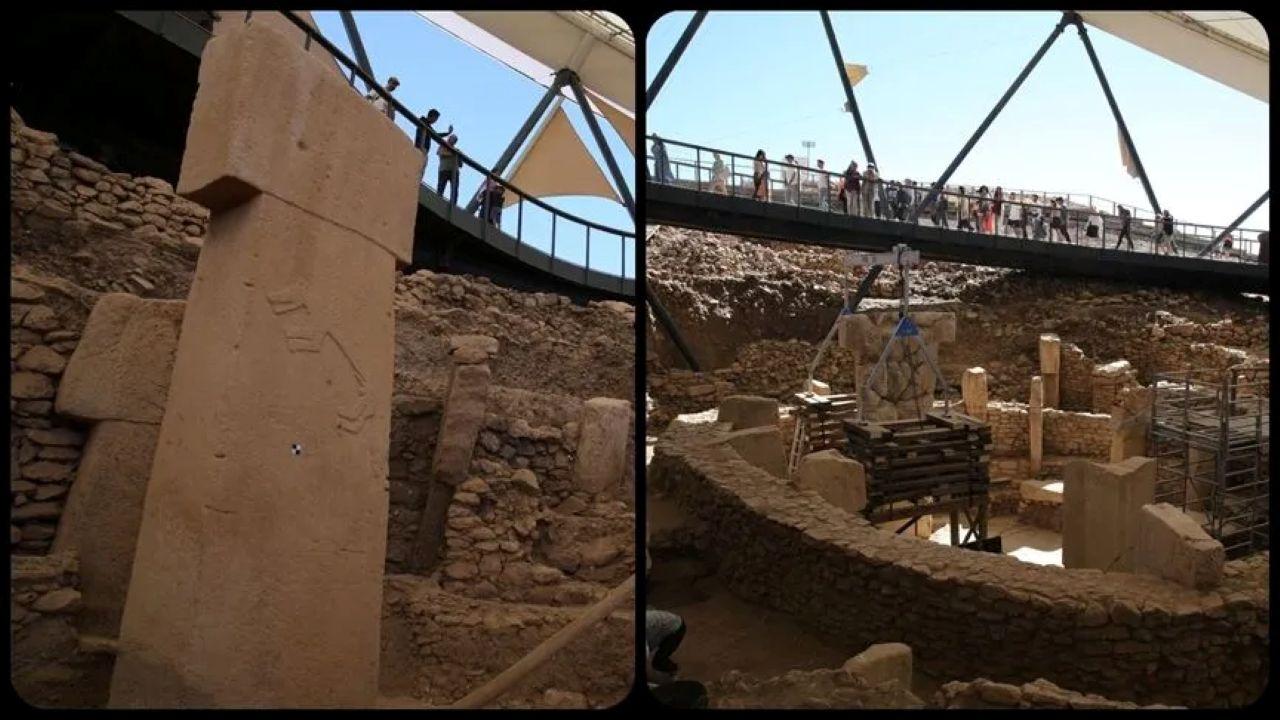
Located near Şanlıurfa in southeastern Türkiye, Göbeklitepe is one of the most remarkable archaeological sites in human history. Dating back approximately 12,000 years, the site is known for its monumental stone structures and the animal figures carved into them.
Dating to the Pre-Pottery Neolithic Period, Göbeklitepe has contributed to the reassessment of long-held views about the Neolithic period by demonstrating that hunter-gatherer communities were capable of constructing large and complex structures.
So, where is Göbeklitepe, how old is it, and when was it discovered? What do the T-shaped stones at the site tell us, and why is Göbeklitepe so important? The following article explores Göbeklitepe's history and significance, followed by a series of questions and answers.
 WHY GOBEKLITEPE SO IMPORTANT?
In an interview with Anadolu Agency (AA) in September, Göbeklitepe Excavation Director Prof. Dr. Necmi Karul stated that excavations, which began at Göbeklitepe in 1995, had revealed monumental structures dating to the Neolithic period.
KARUL'S REMARKS CAN BE SUMMARİSED AS FOLLOWS:
Excavations uncovered settlement layers representing a period of approximately 1,500 years, dating from around 9600 BC to 8200 BC.
The presence of public buildings at Göbeklitepe, including dwellings where people carried out their daily activities, showed that the site had been used as a settlement, rather than solely as a place associated with beliefs where people gathered.
Göbeklitepe's most important distinction is that it has stimulated further research into this period. Among its most significant features are the monumental structures, the T-shaped standing stones within them and, more importantly, the symbols carved into these stones. Taken together, these elements demonstrate the advanced capabilities of the communities living 12,000 years ago in architecture, technology and art.
AGRICULTURE AND ANIMAL HUSBANDRY WERE NOT THE CAUSES OF SEDENTARY LIFE, BUT ITS CONSEQUENCES
Karul explained that findings from research conducted at Göbeklitepe and contemporary sites as part of the Taş Tepeler Project had led to conclusions that challenged previous assumptions about life during this period. The research showed that communities living as hunter-gatherers had adopted a settled way of life. Karul emphasised that these communities had not yet adopted agriculture or animal husbandry when they began living in permanent settlements. He also noted that Göbeklitepe provides evidence of the more effective use of surrounding resources alongside the adoption of a settled lifestyle.
Drawing attention to evidence of attempts to cultivate plants and domesticate animals during the later stages of the period, Karul continued:
"We see that they began cultivating plants and domesticating animals immediately after adopting a settled way of life. Therefore, the process that began with sedentary life at Göbeklitepe and similar sites occupies an important place in the history of archaeology, as it is also where we see the beginning of a productive way of life, one of the most important foundations of today's social order."
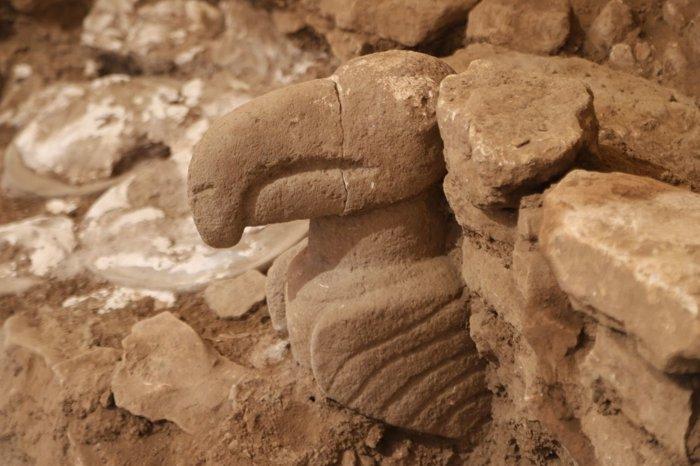
Excavations at Göbeklitepe and Karahantepe have uncovered sculptures dating back thousands of years.
WHAT MAKES GÖBEKLİTEPE SO IMPORTANT?
Karul's other comments in the interview were as follows:
What makes Göbeklitepe so important, attracting the interest of a large part of society and worldwide attention, is that it has laid bare how mistaken our perspective on and perception of the past have been. In other words, it has confronted us with this reality.
We understand that sites such as Göbeklitepe have fundamentally changed the perception that past societies were primitive and underdeveloped.
Göbeklitepe has shown us that the people who lived here 12,000 years ago belonged to communities capable of constructing monumental architecture, gathering to hold assemblies inside these structures, and carving scenes featuring predominantly animal figures onto standing stones. Through these scenes, they made certain mythological stories part of their lives.
It has shown that people living at Göbeklitepe 12,000 years ago had artists and storytellers whose abilities were in no way inferior to those of people in today's societies. They also had artisans capable of carving stories onto standing stones, as well as architects and master builders who designed and constructed these buildings. We can say that Göbeklitepe has also confronted us with how dismissive our present-day perspective has been towards the past.
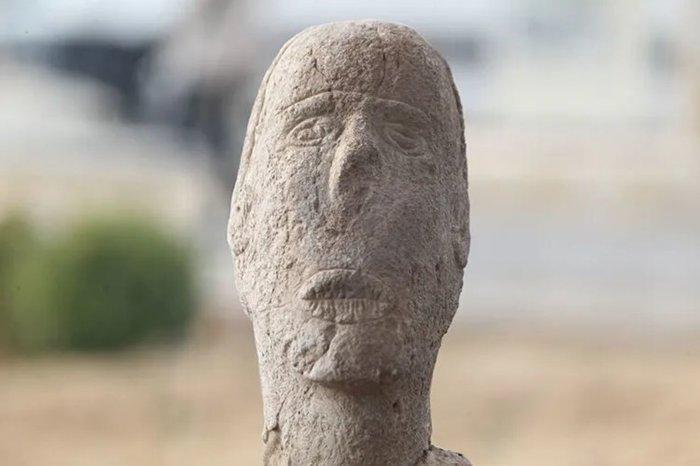
Excavations across a vast area stretching from Göbeklitepe to Karahantepe, Sayburç and Sefertepe have also uncovered three-dimensional human sculptures.
IT CHANGED THE WAY HISTORY IS WRITTEN
While agriculture and animal husbandry were traditionally considered the reasons people adopted a settled way of life, Göbeklitepe and contemporary sites are among the foremost examples demonstrating that settlement preceded agriculture and animal husbandry, rather than resulting from them.
School textbooks have also conveyed the perception that the lives of people 12,000 years ago were limited to the struggle for survival. There was a widespread perception that people lived in caves and endured difficult conditions. We can confidently say that Göbeklitepe demonstrates how far removed this perception is from reality, showing that the skills and achievements of people living 12,000 years ago were highly advanced in many respects, including technology and architecture.
GOBEKLITEPE: QUESTİONS AND ANSWERS
Where Is Göbeklitepe?
Göbeklitepe is located in southeastern Türkiye, approximately 18 kilometres northeast of the city of Şanlıurfa, near Örencik village. The archaeological site lies on a limestone plateau in the Germuş Mountains. The region where Göbeklitepe is situated is part of Upper Mesopotamia, an area that witnessed significant changes during the Neolithic period. According to UNESCO, the region is one of the geographical areas where the world's earliest farming communities emerged.
How Old Is Göbeklitepe?
Göbeklitepe dates back approximately 12,000 years. According to the UNESCO World Heritage Centre, the monumental structures at the site were built by hunter-gatherer groups between 9600 BC and 8200 BC, during the Pre-Pottery Neolithic Period.
The site does not consist of a single structure built at one point in time. It contains structures dating to different periods and evidence of different phases of use.
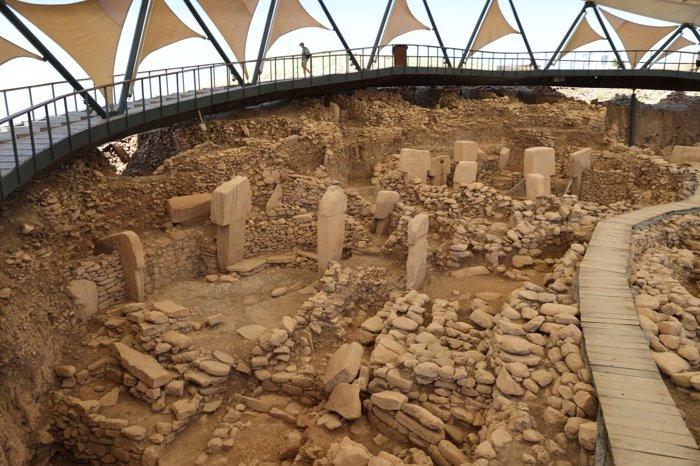
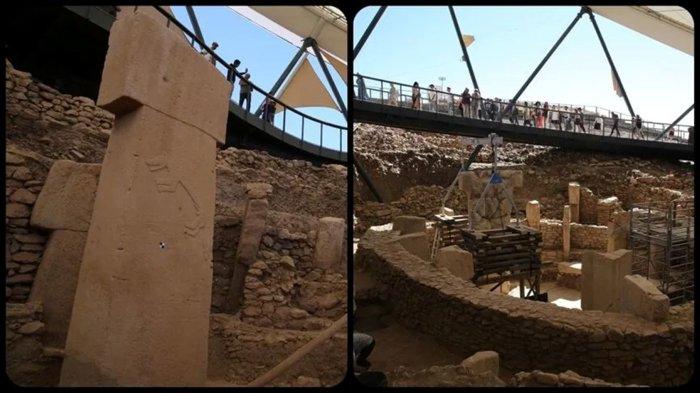
According to the Ministry of Culture and Tourism of Türkiye, notable features of the site include circular and oval structures reaching approximately 30 metres in diameter, with large T-shaped stones positioned at their centres.
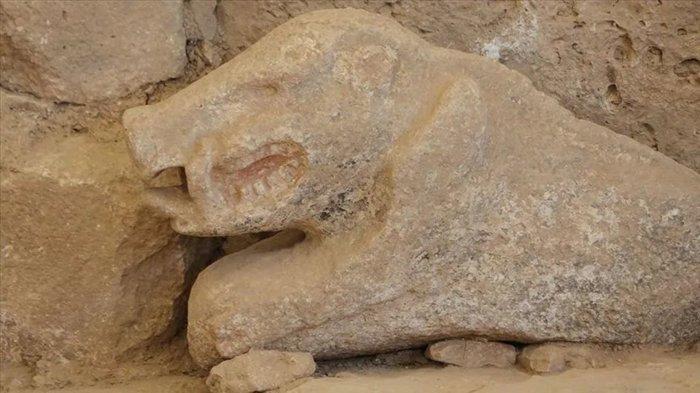
The boar sculpture discovered at Göbeklitepe in 2023.
How Was Göbeklitepe Discovered?
Göbeklitepe is an archaeological site in southeastern Türkiye, near Örencik village in Şanlıurfa, dating back approximately 12,000 years. It was first identified in 1963 during surveys conducted as part of joint research into southeastern Anatolia by the universities of Istanbul and Chicago. The site was recorded as the "V52 Neolithic Settlement." However, its archaeological significance was not fully understood at the time.
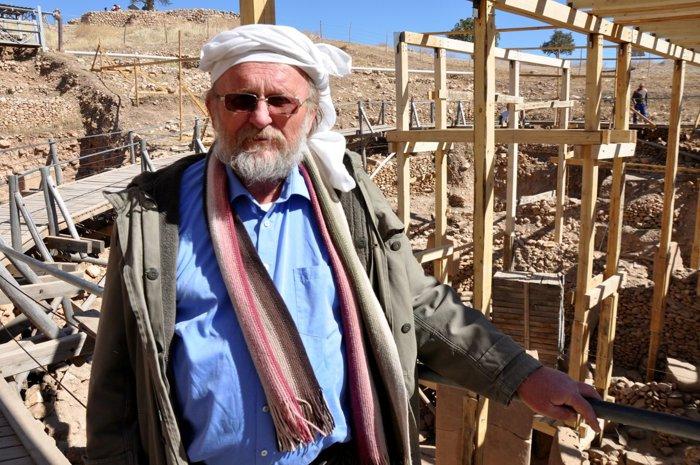
Klaus Schmidt
In 1986, a farmer named Şavak Yıldız discovered a sculpture while ploughing his field. According to information reported by Anadolu Agency, this find played an important role in the development of research at Göbeklitepe. German archaeologist Klaus Schmidt subsequently visited the site in 1994. Excavations began in 1995 through a collaboration between the Şanlıurfa Museum and the German Archaeological Institute.
The excavations revealed monumental structures featuring T-shaped standing stones and animal reliefs. Dating back approximately 12,000 years, these structures made Göbeklitepe one of the important archaeological sites for understanding the Neolithic period. Göbeklitepe was inscribed on the UNESCO World Heritage List in 2018.
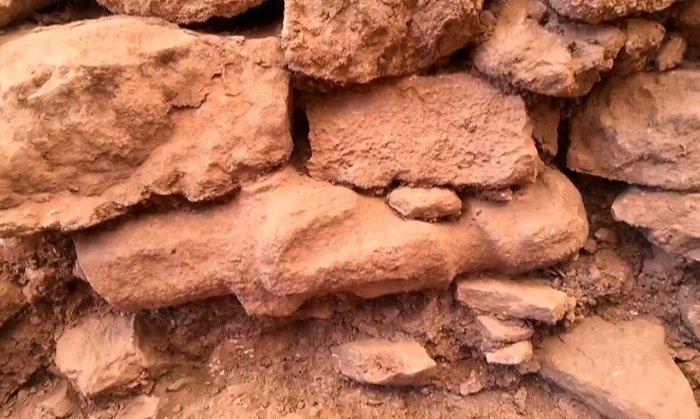
Last year, excavations at Göbeklitepe unearthed a human sculpture placed on its back inside a wall, which is thought to have been an offering.
What Do the T-Shaped Pillars Mean?
Göbeklitepe dates back to the Pre-Pottery Neolithic Period. Its most striking features are monumental circular, oval and rectangular structures containing T-shaped limestone pillars.
According to UNESCO, some of the T-shaped pillars reach up to 5.50 metres in height. Considered abstract representations of the human form, some of these pillars feature reliefs depicting wild animals.
The discovery of smaller, non-monumental structures near the site has provided new evidence that Göbeklitepe consisted of more than monumental buildings alone. UNESCO states that these structures are considered possible dwellings.
What Does Göbeklitepe Tell Us?
The most striking finds uncovered during excavations at Göbeklitepe are the large T-shaped limestone pillars. Their surfaces feature reliefs depicting foxes, wild boars, snakes, vultures and other wild animals.
UNESCO states that these depictions provide important insights into the ways of life and belief systems of the people who lived in Upper Mesopotamia thousands of years ago.
Some of the pillars feature an abstract representation of the human form. Details associated with the human body, including arms, hands, belts and clothing, provide important evidence that these structures were more than simple blocks of stone.
Who Lived at Göbeklitepe?
The communities living in the region when Göbeklitepe was built followed a hunter-gatherer way of life.
This is crucial to understanding the significance of Göbeklitepe. In the past, it was widely believed that monumental architecture developed only after settled, farming societies with large populations had emerged.
However, the structures at Göbeklitepe have shown that hunter-gatherer communities were also capable of organising large-scale collective efforts and using advanced techniques in stoneworking and architecture. UNESCO also considers the site evidence of an important historical period during which the transition from hunter-gatherer ways of life to the earliest farming communities took place.
Why Is Göbeklitepe Important?
The significance of Göbeklitepe lies in more than its great age. Its importance stems primarily from the new insights it provides into the social organisation, architectural capabilities and belief systems of people who lived approximately 12,000 years ago.
The monumental structures at Göbeklitepe required hunter-gatherer communities to extract and work large stone blocks, position them within a defined architectural arrangement and construct buildings on a large scale.
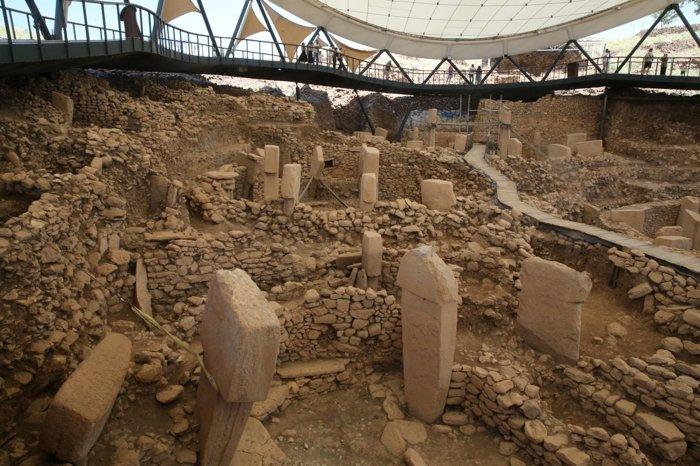
UNESCO considers Göbeklitepe one of the earliest examples of monumental architecture in human history. The extraction and transportation of the T-shaped pillars, as well as the construction of the buildings, provide important evidence of the architectural and engineering capabilities of the period.
More importantly, Göbeklitepe sheds light on the period of profound transformation between hunter-gatherer ways of life and the emergence of the earliest farming communities.
For this reason, Göbeklitepe goes beyond answering the question, "What were people doing 12,000 years ago?" The site provides an important archaeological resource for understanding how people organised themselves, the purposes for which they gathered, how their beliefs took shape and the social conditions that enabled them to construct large-scale structures.
How to get to Göbeklitepe from IstanbulGöbeklitepe is located about 18 kilometers northeast of Şanlıurfa city center, near Örencik village in southeastern Türkiye. Visitors traveling from Istanbul can fly to Şanlıurfa and continue to the archaeological site by car or taxi. The site can also be reached from Şanlıurfa city center by public transport. Travelers should check current flight schedules and local transport services before setting out.
How to get to Göbeklitepe from Şanlıurfa
Göbeklitepe is approximately 18 kilometers from Şanlıurfa city center. Visitors can travel to the site by car or taxi, or check the Şanlıurfa Metropolitan Municipality's official transport information for public bus services. Bus routes and departure times may change, so it is advisable to confirm the latest timetable before visiting.
Göbeklitepe visiting hours and tickets
Göbeklitepe is listed as open every day by Türkiye's Ministry of Culture and Tourism. The official museum website currently lists opening hours of 8:30 a.m. to 5:30 p.m., with the ticket office closing at 5:00 p.m. Seasonal hours may differ, so visitors should check the official listing before their visit.
- Popular News -

How do you drink your tea? Study reveals surprising findings about heart health
Major surprise at Troy: First musical instrument found in 160 years of excavations

How to Make Authentic Turkish Bursa Doner Kebab: Traditional Techniques and Tips

Tesla unveils new car it says can 'fly'
9,000-year-old mining workshop found in Türkiye

World's Oldest Shipwreck Found in Türkiye: Was It Heading to Troy?