

How to say hello, hi and “how are you” in Turkish: Essential phrases for travelers
If you are planning to travel to Türkiye, learning a few Turkish words to use in daily life beforehand can make things easier for you. There are many basic expressions you can use when asking someone a question at a hotel, restaurant, café, taxi, shop, or on the street.
These basic words of everyday conversation are among the questions foreigners search for most frequently on the internet about Turkish. Searches such as "How do you say thank you in Turkish?", "How do you say hi in Turkish?", "How do you say hello in Turkish?" and "How are you in Turkish?" are among the expressions that visitors coming to Türkiye want to learn first.
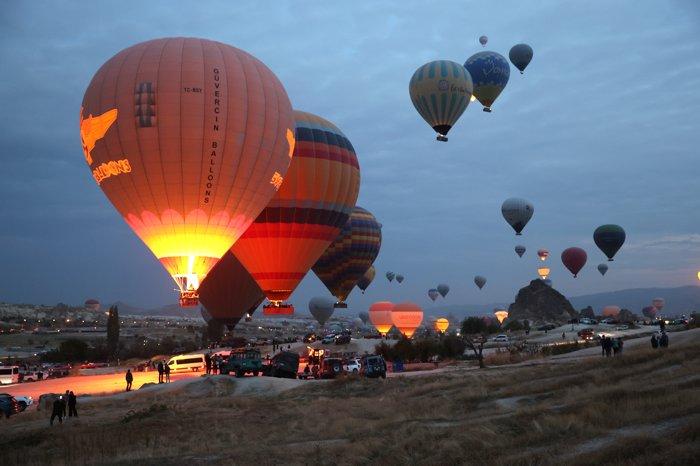
Cappadocia
While some expressions in Turkish have more than one equivalent, different forms of certain words can also be used depending on the person you are talking to. For example, the question "how are you?" is said one way in a casual conversation and another way in a more polite conversation.
Here are the Turkish expressions that will be most useful to you in your daily life in Türkiye.
------------------------------------------------------------------------------------------------------How do you say hello in Turkish?
Merhaba
English: Hello
The most basic way to say "hello" in Turkish is to say "Merhaba."
Merhaba can be used when starting a conversation with someone you don't know, entering a shop or restaurant, approaching a hotel reception, or politely addressing anyone.
In daily conversation, it can be used while addressing both women and men, as well as a single person or more than one person.
For example, when you enter a restaurant, you can start the conversation simply by saying:
Merhaba.
If you are going to ask a question:
Merhaba, bu müze nerede?
means "Hello, where is this museum?"
------------------------------------------------------------------------------------------------------How do you say hi in Turkish?
Selam
English: Hi
In Turkish, "Selam" is used as the equivalent of the more casual English word "hi."
While "Merhaba" is a more general greeting expression, "Selam" has a more relaxed and everyday tone.
You can say to a friend or someone you have met before:
Selam!
When you run into a friend:
Selam, nasılsın?
you can use the expression.
When talking to someone you are meeting for the first time and know nothing about, "Merhaba" is a safer and more neutral choice.
 ------------------------------------------------------------------------------------------------------
How do you say thank you in Turkish?
Teşekkür ederim
English: Thank you
One of the most common ways to say "thank you" in Turkish is "Teşekkür ederim."
You can use this expression when someone helps you, gives you directions, brings your order, or assists you with any matter.
For example, when a taxi driver takes you to where you want to go:
Teşekkür ederim.
you can say.
You can also use the same expression when you pay the bill at a restaurant or when a waiter helps you.
Teşekkür ederim is a polite and general usage. Therefore, it is one of the first Turkish expressions a visitor coming to Türkiye needs to learn.
Teşekkürler
English: Thanks
"Teşekkürler" can be used as a shorter form of the expression "thank you" and is quite close to the English word "thanks."
Teşekkür ederim → Thank you
Teşekkürler → Thanks
Both expressions are used to express thanks.
Sağ ol
In daily and casual conversations, "Sağ ol" is also used to say thank you.
It is an expression you can hear especially among friends or close acquaintances.
Therefore, if you hear someone saying "Sağ ol" to you in Türkiye, you can understand that it is used in the sense of "thanks" or "thank you" depending on the context.
What is thank you in Turkish?
If you are looking for the Turkish equivalent of the word "thank you," the most basic answer is:
Teşekkür ederim
Besides this, in daily conversation:
Teşekkürler Sağ ol
you can also hear expressions like these.
The main difference in their usage relates to the tone of the conversation and the relationship between the individuals.
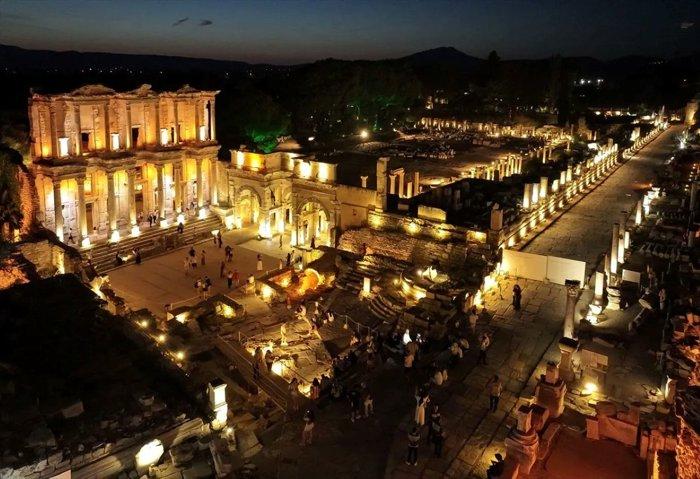
Ephesus
------------------------------------------------------------------------------------------------------How do you say please in Turkish?
Lütfen
English: Please
To say "please" in Turkish, "Lütfen" is used.
When asking for something, it can be used at the beginning or the end of the sentence.
For example, in a café:
Bir kahve, lütfen.
you can say.
When asking someone for help:
Lütfen bana yardım eder misiniz?
you can use the expression.
"Lütfen," which can also be used on its own, is one of the basic words you will encounter frequently in daily life.
-----------------------------------------------------------------------------------------------------How do you say how are you in Turkish?
There are two main usages of the question "How are you?" in Turkish.
Nasılsınız?
A more polite or distant usage.
Nasılsın?
Casual, everyday usage.
Who you are speaking to matters in Turkish. It is appropriate to say "Nasılsınız?" to someone you don't know or in a more formal setting.
To your friend:
Nasılsın?
you can say.
Therefore, someone asking you "Nasılsınız?" in Türkiye is the polite form of the English question "How are you?"
How do you respond to "How are you?" in Turkish?
If someone asks you "Nasılsınız?", one of the most basic answers is:
İyiyim, teşekkür ederim.
English: I'm fine, thank you.
In a more casual conversation:
İyiyim.
saying this is also sufficient.
If a friend asks "Nasılsın?":
İyiyim, sağ ol.
you can say.
Thus, a short conversation might look like this:
Merhaba, nasılsınız?
Hello, how are you?
İyiyim, teşekkür ederim. Siz nasılsınız?
I'm fine, thank you. How are you?
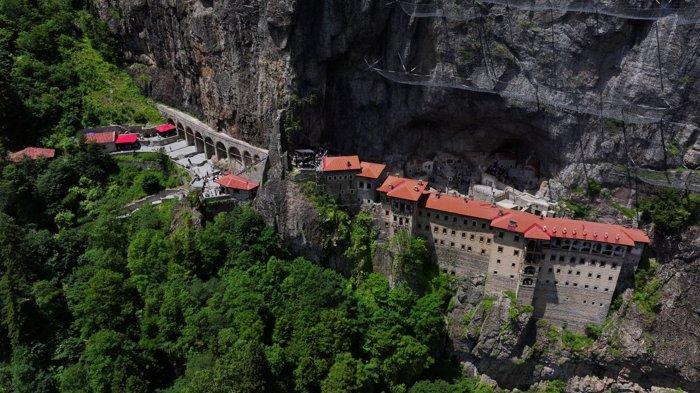
Sumela Monastery
------------------------------------------------------------------------------------------------------How do you say good morning in Turkish?
Günaydın
English: Good morning
To say "good morning" in Turkish, "Günaydın" is used.
When greeting someone you encounter during morning hours, you can directly say:
Günaydın.
It is one of the most basic expressions you can use when going to morning breakfast at a hotel, entering a café, or talking to people you encounter when starting the day.
For example:
Günaydın, bir çay lütfen.
Good morning, a tea please.
------------------------------------------------------------------------------------------------------How do you say goodbye in Turkish?
A few different expressions are used for "goodbye" in Turkish. There are small but important differences in their usage.
Hoşça kal
English: Goodbye
Hoşça kal is one of the traditional expressions used when parting ways.
Güle güle
English: Goodbye
Güle güle is also used when saying goodbye, but it is not used by the same person as "hoşça kal."
In general usage, the person leaving says "Hoşça kal," while the person staying behind says "Güle güle."
For example, if you are leaving a friend's house:
Hoşça kal!
Your friend can say to you:
Güle güle!
Görüşürüz
English: See you
In daily conversation, "Görüşürüz" corresponds to the English expression "see you."
When parting from a friend:
Görüşürüz!
saying this is quite natural.
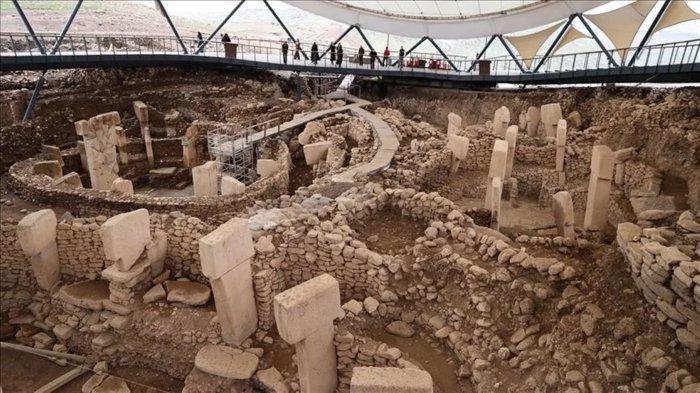
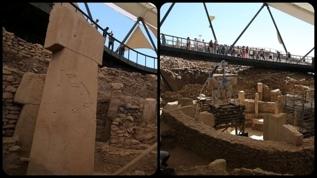
Göbekli Tepe
A quick Turkish phrase guideIf you want to see the most important phrases in one place before traveling to Türkiye, you can save this list.
| English | Turkish |
|---|---|
| Hello | Merhaba |
| Hi | Selam |
| Thank you | Teşekkür ederim |
| Thanks | Teşekkürler |
| Thanks (informal) | Sağ ol |
| You're welcome | Rica ederim |
| Please | Lütfen |
| How are you? | Nasılsınız? |
| How are you? (informal) | Nasılsın? |
| I'm fine | İyiyim |
| Good morning | Günaydın |
| Goodbye | Hoşça kal |
| Goodbye | Güle güle |
| See you | Görüşürüz |
| Excuse me | Affedersiniz |
| I'm sorry | Özür dilerim |
| What is your name? | Adınız ne? |
| My name is... | Benim adım... |
| I don't understand | Anlamıyorum |
| Do you speak English? | İngilizce konuşuyor musunuz? |
| Yes | Evet |
| No | Hayır |
Yes and no in Turkish
Two of the most basic words in everyday communication are evet and hayır.
Evet → Yes
Hayır → No
When someone asks you a question, you can simply answer:
Evet.
or
Hayır.
------------------------------------------------------------------------------------------------------
A simple conversation in Turkish
Here is a simple example to show you how you can use these expressions in a real conversation:
Merhaba.
Hello.
Merhaba, nasılsınız?
Hello, how are you?
İyiyim, teşekkür ederim. Siz nasılsınız?
I'm fine, thank you. How are you?
Ben de iyiyim.
I'm fine too.
Bir Türk kahvesi, lütfen.
A Turkish coffee, please.
Tabii.
Of course.
Teşekkür ederim.
Thank you.
Rica ederim.
You're welcome.
Görüşürüz.
See you.
By learning these few expressions, you can start many simple everyday conversations you may encounter in Türkiye.
Turkish words to learn before traveling to Türkiye
A visitor who is just starting to learn Turkish does not need to memorize hundreds of words. Basic expressions such as merhaba (hello), selam (hi), teşekkür ederim (thank you), lütfen (please), nasılsınız (how are you), günaydın (good morning) and görüşürüz (see you) can provide an important starting point for everyday communication.
Adding a few practical expressions such as evet (yes), hayır (no), affedersiniz (excuse me), anlamıyorum (I don't understand) and İngilizce konuşuyor musunuz? (Do you speak English?) can help you feel more comfortable in many simple situations you may encounter during your trip to Türkiye.
Turkish also has informal and polite forms of some expressions, which is an important distinction in everyday use of the language. For this reason, learning not only the English meaning of a word but also when and with whom to use it is a more useful way to start speaking Turkish.
Turkish numbersKnowing the basic numbers can help when checking prices, ordering food, asking about times or shopping in Türkiye.
| Number | English | Turkish |
|---|---|---|
| 1 | one | bir |
| 2 | two | iki |
| 3 | three | üç |
| 4 | four | dört |
| 5 | five | beş |
| 6 | six | altı |
| 7 | seven | yedi |
| 8 | eight | sekiz |
| 9 | nine | dokuz |
| 10 | ten | on |
| 20 | twenty | yirmi |
| 30 | thirty | otuz |
| 40 | forty | kırk |
| 50 | fifty | elli |
| 100 | one hundred | yüz |
| 1,000 | one thousand | bin |
| 1,000,000 | one million | 1 milyon |
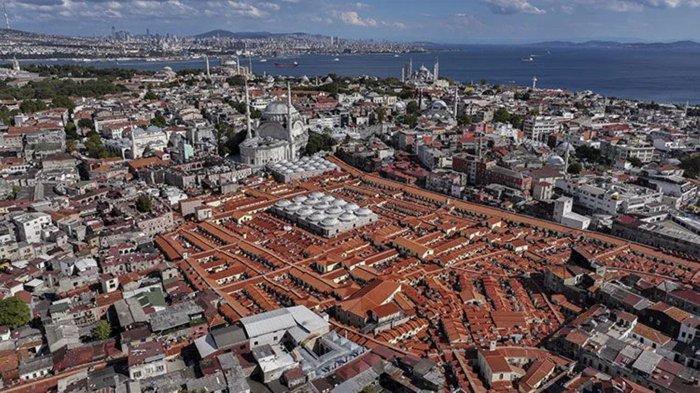
Grand Bazaar (Kapalıçarşı)
Turkish currencyThe currency used in Türkiye is the Turkish lira, commonly written as TL or ₺.
| English | Turkish |
|---|---|
| Turkish lira | Türk lirası |
| money | para |
| price | fiyat |
| how much? | ne kadar? |
| How much is this? | Bu ne kadar? |
| Expensive | pahalı |
| Cheap | ucuz |
20 TL — yirmi lira
100 TL — yüz lira
1,000 TL — bin lira
After this article, you can also read our article titled "How to Make Turkish Coffee?"- Popular News -

How do you drink your tea? Study reveals surprising findings about heart health
Major surprise at Troy: First musical instrument found in 160 years of excavations
How to Make Authentic Turkish Bursa Doner Kebab: Traditional Techniques and Tips

Tesla unveils new car it says can 'fly'
9,000-year-old mining workshop found in Türkiye
World's Oldest Shipwreck Found in Türkiye: Was It Heading to Troy?