


How to make and drink Turkish coffee: From its foam to its presentation, coffee culture
For Turkish coffee lovers, every detail, from its consistency to its foam, matters. So, how do you make a delicious Turkish coffee with plenty of foam? Here are the key points of Turkish coffee, from the right coffee-to-water ratio and cooking method to using a wooden spoon and serving suggestions.
Turkish coffee is not just a beverage in Türkiye but also part of a culture that has been preserved for centuries. More than 500 years have passed since coffee beans arrived in the Ottoman lands, and coffee began to spread in Istanbul in the early 16th century. As its distinctive cooking method developed, coffeehouses also spread rapidly. These places were not only where coffee was consumed but also became social spaces where people gathered, read books, listened to poetry and chatted.
Over time, unique customs developed around coffee. From hosting guests and the tradition in which families come together before marriage to coffee fortune telling and carefully prepared coffee cups and cezves, many traditions became part of Turkish coffee culture. The saying "A cup of coffee is remembered for forty years" is also one of the best-known expressions describing the meaning of coffee in Türkiye.
WHAT IS TURKISH COFFEE?
Turkish coffee culture is among the traditions that have been preserved in Türkiye. According to an academic article published by Anadolu Agency, coffee was described in old sources as "a black-colored beverage drunk by Turks, not consumed with meals, savored in slow sips and never absent from gatherings of friends."
Turkish coffee is defined as "a foamy coffee that differs in its presentation and consumption, has its own distinctive cooking methods, and is drunk in cups with or without handles."
One of the features that distinguishes Turkish coffee from other coffees is its unique preparation and drinking rituals. Using a cezve, cooking the coffee over low heat, pouring it slowly into cups and drinking it in small sips are among the important elements of this culture.
ON THE UNESCO LIST
The cultural value of Turkish coffee was also internationally recognized when it was added to UNESCO's Representative List of the Intangible Cultural Heritage of Humanity in 2013.
One of the elements that makes the coffee distinctive is the way it is prepared. Finely ground coffee is slowly cooked over low heat in a cezve, its foam is preserved, and it is served in the cup with its coffee grounds, giving Turkish coffee its distinctive character.
For this reason, making a good Turkish coffee is not simply a matter of bringing coffee and water together in a cezve. Details such as the temperature of the water used, the amount of coffee, the heat used during cooking and preserving the foam directly affect the flavor.
A CHEF'S RECIPE FOR PERFECTLY FOAMY TURKISH COFFEE
So, how is Turkish coffee made, and what is the most important tip for making Turkish coffee? Chef Hatice Akman, who points out that the foam should not be allowed to boil when making Turkish coffee, shared a Turkish coffee recipe.
INGREDIENTS
For 1 cup of Turkish coffee:
-1 Turkish coffee cup of cold drinking water (approximately 60–70 ml)-7–8 grams of Turkish coffee (approximately 2 level teaspoons)
-Sugar (optional)
-Medium sweet: 1 sugar cube
-Sweet: 2 sugar cubes
HOW TO MAKE TURKISH COFFEE?
-First, add the water to the cezve, followed by the coffee and, if using, the sugar.
-Before placing it on the stove, stir well with a wooden spoon, if available. Do not stir again afterward.
-Cook the coffee slowly over low heat.
-When foam begins to rise around the edges, remove the cezve from the heat without allowing it to boil.
-Divide the foam between the cups.
-Place the cezve back on the stove briefly. When the coffee is about to rise, slowly pour it into the cup from close to the rim.
KEY TIPS FOR TURKISH COFFEE
The right coffee-to-water ratio, cold water and low heat are important for the consistency and foam of Turkish coffee. Taking the coffee off the heat before the foam boils and making sure not to burn the coffee are also among the points to pay attention to.
#Use cold water.#If possible, choose freshly ground coffee.
#Stir the coffee with a wooden spoon before placing it on the stove.
#Cook it over low heat.
#Do not boil the coffee quickly over high heat. This may cause the foam to disappear and the coffee to develop a bitter taste.
#Pour the coffee into the cup slowly and from close to the cup, not from a height.
WHY IS A WOODEN SPOON IMPORTANT FOR TURKISH COFFEE?
A wooden spoon helps stir more gently without scratching the cezve. It is especially preferred for copper cezves.
A wooden spoon transfers less heat to the hand compared with a metal spoon.
However, it cannot necessarily be said that a metal spoon always spoils the taste of the coffee. A stainless steel spoon can also be used.
HOW IS TURKISH COFFEE SERVED?
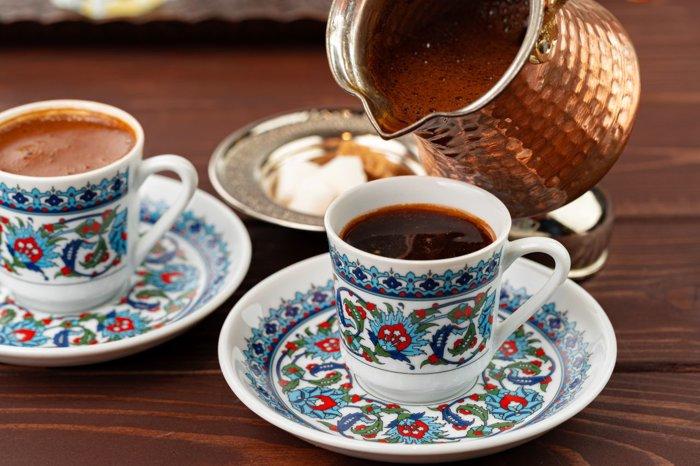
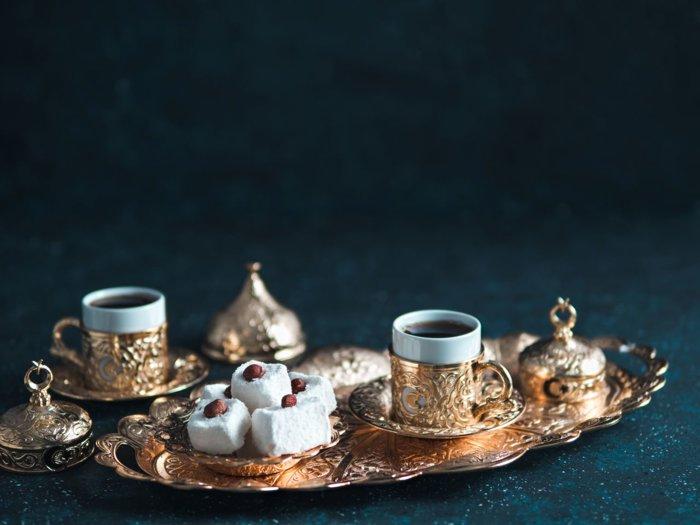
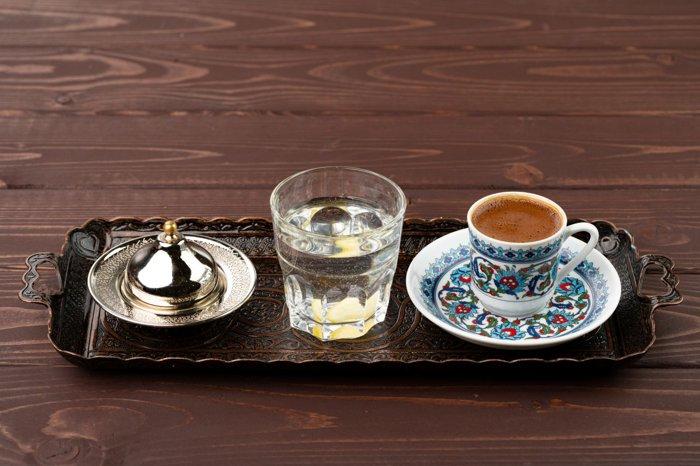
Today, Turkish coffee cups are smaller than other cups and hold an average of 50–70 milliliters of liquid. A single-handled cup has its own saucer, and these cups are used specifically for serving Turkish coffee.
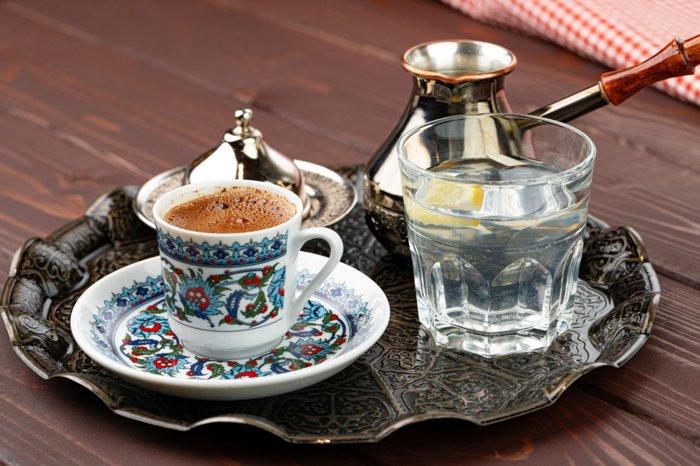
When Turkish coffee is served, it is preferred to pour it slowly into the cup and wait for about 1 minute so that the coffee grounds settle to the bottom. Serving a glass of water alongside the coffee is also part of the traditional presentation. Drinking water before the coffee cleanses the tastes remaining in the mouth, allowing the taste of the coffee to be better appreciated.
PROFESSIONAL MEASUREMENTS FOR TURKISH COFFEE
For 1 cup of Turkish coffee, approximately 65 ml of water and 7–8 grams of coffee is a good starting ratio.
Those who want a stronger coffee can increase the amount of coffee to 8–9 grams.
WHY IS WATER AND LOKUM SERVED WITH TURKISH COFFEE?
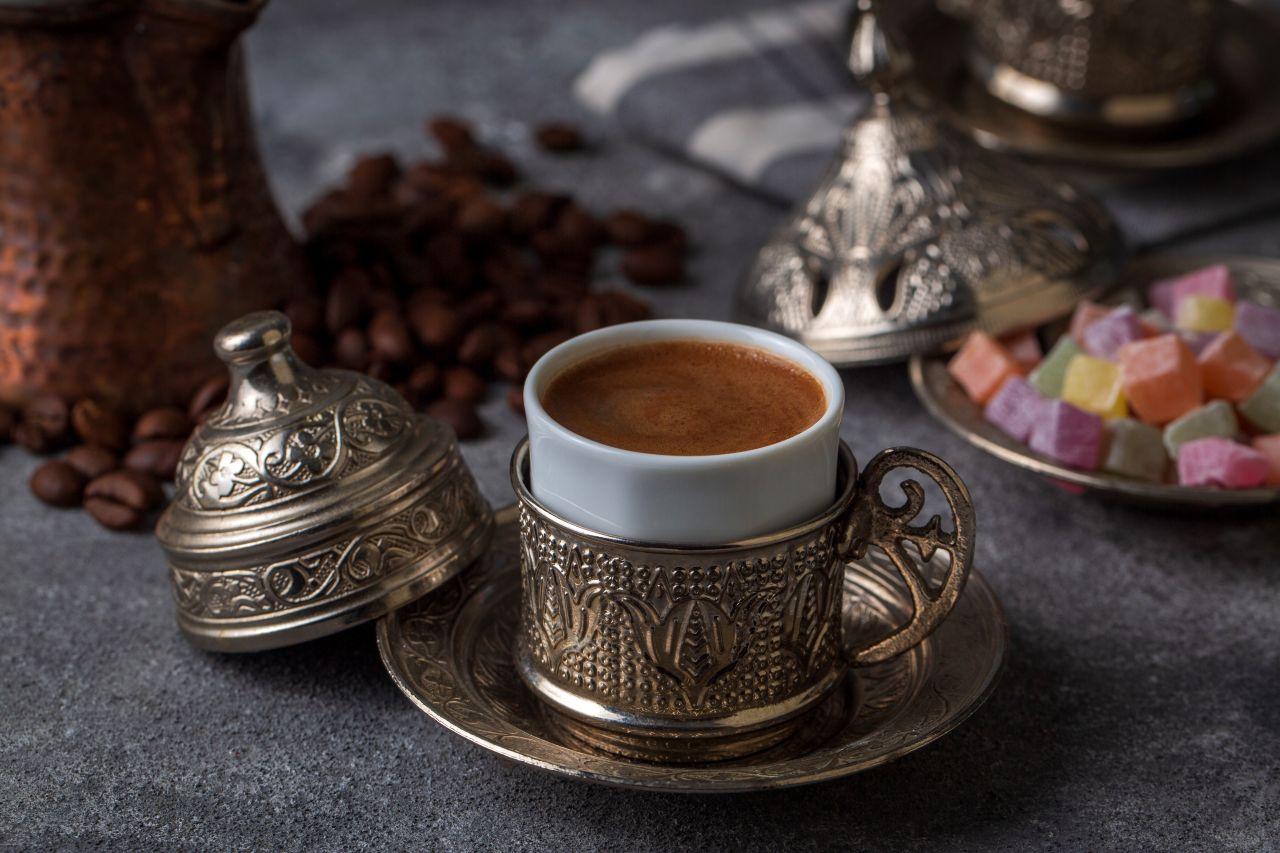
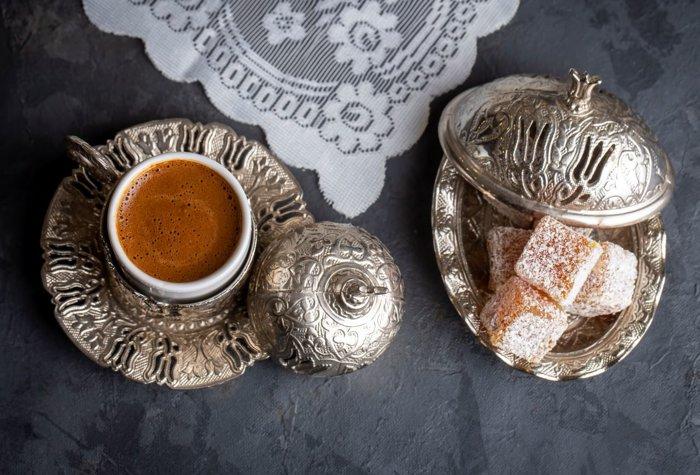
Presentation is at least as important as preparation when it comes to Turkish coffee. Silver trays and cup holders found in traditional coffee sets are not only pieces used for serving, but also stand out as objects reflecting the aesthetic side of coffee culture.
Coffee is also considered one of the symbols of communication, hospitality and sharing in Turkish culture. Offering coffee to guests and chatting over coffee are among the traditions that continue in daily life as well as on special occasions.
One of the traditional accompaniments to coffee is also lokum (Turkish delight). Served to guests alongside coffee in different varieties, lokum remains one of the traditional complements to this culture.
WHY IS TURKISH COFFEE SERVED WITH ITS COFFEE GROUNDS?
One of the features that distinguishes Turkish coffee from other types of coffee is that it is served with its coffee grounds. Because the coffee used in Turkish coffee is ground very finely and cooked in a cezve, the coffee grounds settle to the bottom of the cup. The coffee is transferred to the cup without being filtered and served with its coffee grounds.
Leaving the coffee grounds in the cup also paved the way for the emergence of the tradition of coffee fortune telling over time.
In this respect, Turkish coffee has a distinctive place not only because of the way it is prepared and served, but also because of the social and cultural rituals that have developed around it.
 After this article, you can also read our article titled "Is Turkish Coffee Healthy?"
Is Turkish coffee healthy? A cardiologist explains the benefits and risks of coffee
- Popular News -

Has Noah's Ark been found? Here's what we know so far

2,500-year-old discovery at ancient city where Alexander the Great's soldiers settled
190-year-old church known for its wall paintings to open to visitors

WhatsApp introduces optional parental controls for teenagers

Is Turkish coffee healthy? A cardiologist explains the benefits and risks of coffee

Catacombs of Kom el Shoqafa: Hidden underground for centuries, discovered by chance