

Hidden underground world uncovered beneath Istanbul's Hagia Sophia
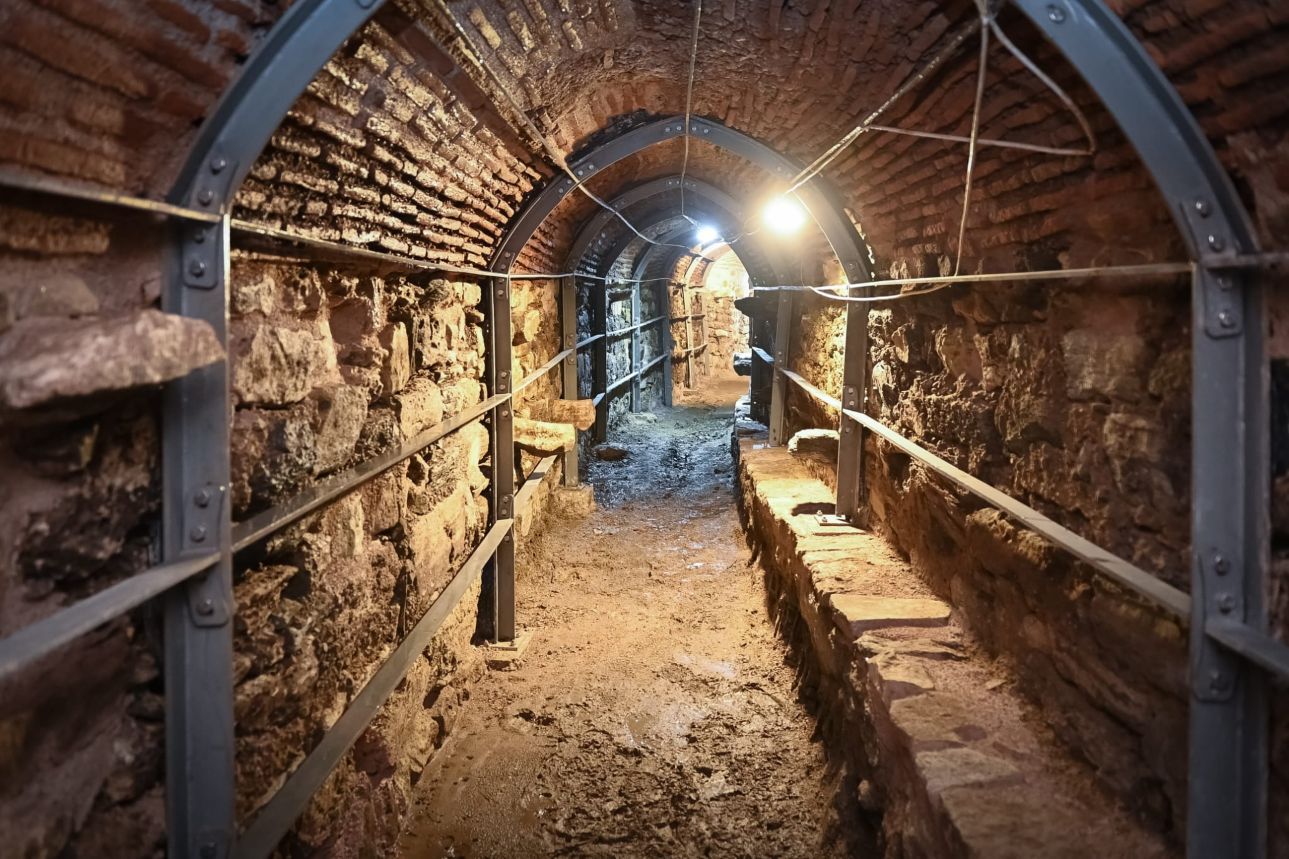
Restoration work beneath Hagia Sophia, one of Istanbul's most iconic historic landmarks, has revealed a hidden underground world that has remained concealed for centuries.
One tunnel appears to run toward Basilica Cistern, while flowing water raises questions over ancient supply system
Beneath the vast dome and marble floors of Istanbul's Hagia Sophia Grand Mosque, another part of the building's story is slowly emerging from layers of mud, rubble and earth accumulated over centuries.
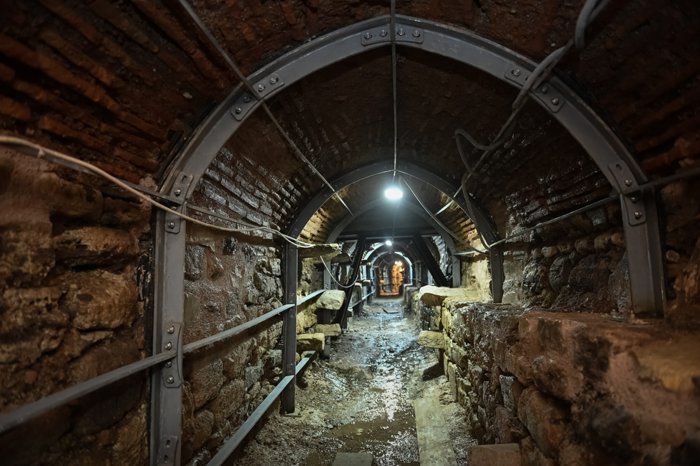
Restoration teams working underneath the historic structure have cleared around 420 meters of tunnels, revealing a network of underground passages, chambers and water infrastructure that researchers believe may preserve clues to how this part of the ancient city functioned.
So far, specialists have identified six underground spaces and nine tunnels, some of which may date back to the Roman era and appear to have been adapted and reused over subsequent centuries.
The work began around two years ago near a hypogeum, or underground burial structure, at Hagia Sophia's northeastern corner.
Many of the spaces had gradually filled with soil after their roofs were damaged, effectively sealing them from view.
Around 1,000 cubic meters of material, estimated at roughly 3,000 tons, has now been removed, exposing areas that had remained inaccessible.
But perhaps the most intriguing discovery lies in the direction some of the tunnels take.
A route toward Basilica Cistern
Professor Ahmet Gulec, a member of Hagia Sophia's Scientific Committee, said one of the first tunnels uncovered appears to head directly south toward the nearby Basilica Cistern, one of Istanbul's best-known surviving Byzantine-era water structures.
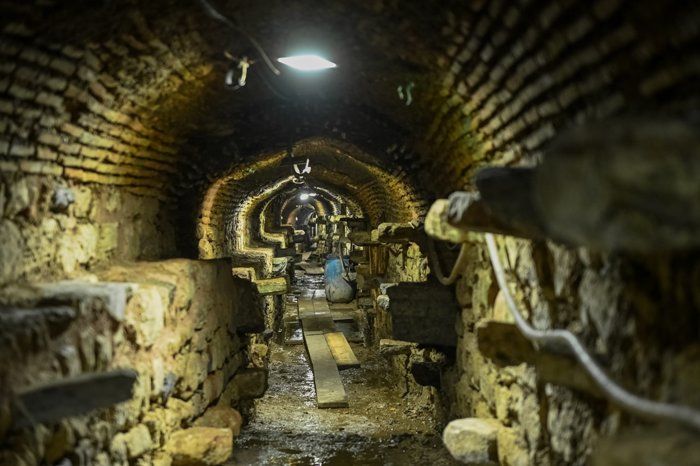
"The first tunnel we opened here is the one closest to Hagia Sophia. Our tunnel heading south goes directly toward the Basilica Cistern," Gulec said.
Researchers were able to trace its route only after removing years of accumulated mud.
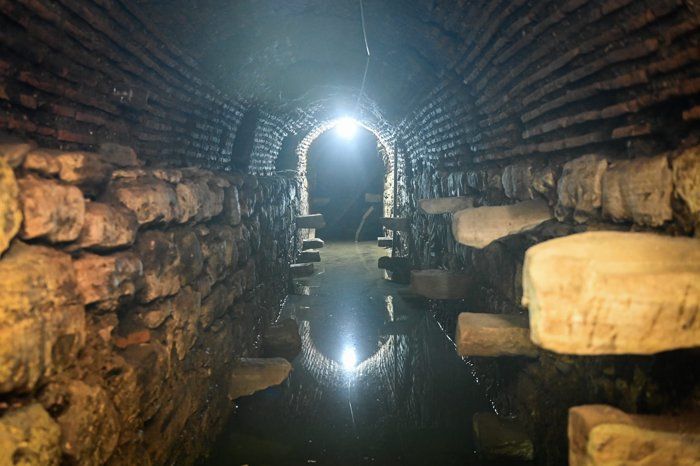
The passage descends at a gradient of about 3%, and water is still flowing through the system from beneath Hagia Sophia.
Its source remains uncertain.
Gulec said it could be natural groundwater or water entering through parts of the ancient distribution system associated with Istanbul's historic aqueduct network.
Another tunnel travels north before turning west, while the longest passage investigated so far extends for more than 200 meters.
Historic maps describe a Roman-era route stretching from the area around Little Hagia Sophia toward Sarayburnu, but researchers have not yet established whether the newly exposed passages formed part of that network.
Samples from the tunnels are now undergoing analysis.
"At this stage, we can only say that one of them was part of the infrastructure beneath the Roman-period atrium," Gulec said.
A hidden layer of Hagia Sophia
The discoveries add another dimension to a monument whose visible architecture already reflects successive eras of Istanbul's history.
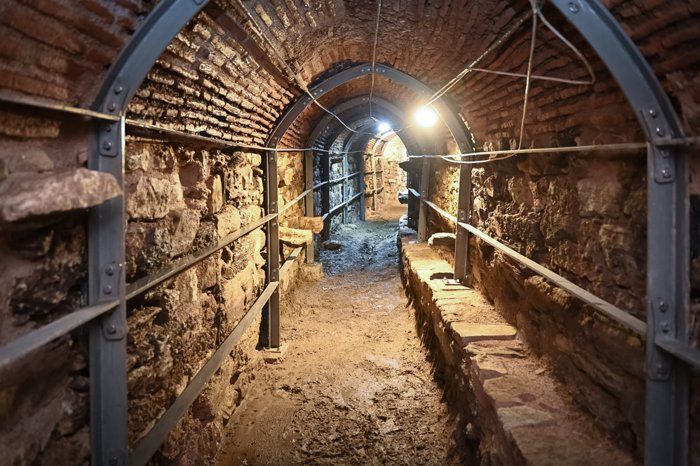
Rather than being isolated rooms, researchers increasingly see the underground spaces as part of a wider system that supported buildings and water movement in the historic peninsula.
That network may also eventually help researchers understand how Hagia Sophia interacted with surrounding structures beneath today's streets and squares.
For now, however, large sections remain under investigation.
Teams continue cleaning, excavating, documenting and strengthening the underground areas as part of the wider restoration project.
Could visitors eventually go underground?
The possibility that the tunnels could one day become accessible to the public has already generated interest, but officials say such a step remains some distance away.
"There is still a great deal of work that needs to be done before this area could be opened to visitors," Gulec said.
Safety, health conditions, structural stability and visitor circulation would all need to be addressed before the underground network could receive the public.
"There has not yet been a final decision," he said. "Our minister and all of us very much want it, but there are issues regarding the health and safety of visitors that need to be studied and acted upon."
Discussions are continuing as researchers work deeper into the system.
- Popular News -
What Lies Beneath Hagia Sophia? First Images of Its Historic Tunnels

GTA 6 generates estimated $2.36 billion in launch revenue

GTA VI ties 28-year-old Metacritic record with near-perfect score
Millions of red crabs begin annual migration to the ocean on Christmas Island
Hundreds of coffins and ‘gold tongues' unearthed beneath the ground in Egypt
Tesla to refund Cybertruck customers as production set to end